Wnt pathway is activated when the Wnt protein ligand binds itself to specific receptors located on the cell membrane of e.g. chondrocytes or synovial like fibroblasts. That action leads to destabilization of the β-catenin degradation complex and what follows, the cumulation of this protein in the cytoplasm. Subsequently, accumulated β-catenin molecules are able to migrate to the cell nuclei (acting as a transcription factors) and by this they influence transcription of wide range of genes, including ones that are responsible for the progression of the OA3.
Therapeutic rationale of DKK-1 protein enriched blood derived product in OA affected joints
Current strategy in OA therapies focuses on blocking the overactive canonical Wnt signaling pathway in the synovial joint tissues at the molecular level. There are numbers of known chemical inhibitors, but DKK-1 is one of the most potent and, what is important, it is endogenously produced Wnt signaling pathway inhibitor.
When DKK-1 protein binds to the Wnt signaling pathway receptor, it blocks the specific binding site of the Wnt ligand protein, preventing further pathway activation. This leads to β-catenin degradation complex activation and further β-catenin molecules degradation. Lack of β-catenin proteins in cell cytoplasm prevents the transcription mechanism activation and the factors responsible for OA progression cannot be produced by the chondrocytes or synovial like fibroblasts4.
Interestingly, PLTs are known, rich source of DKK-1 protein. When properly activated and stimulated, platelets can secrete increased amounts of this natural inhibitor. Thus, activated autologous blood-derived products, after the separation and concentration can provide an abundance of Wnt signaling pathway inhibitor. Further intra-articular administration of this can lead to the reduction of the degradation of articular cartilage and diminishing of the joint inflammation5.
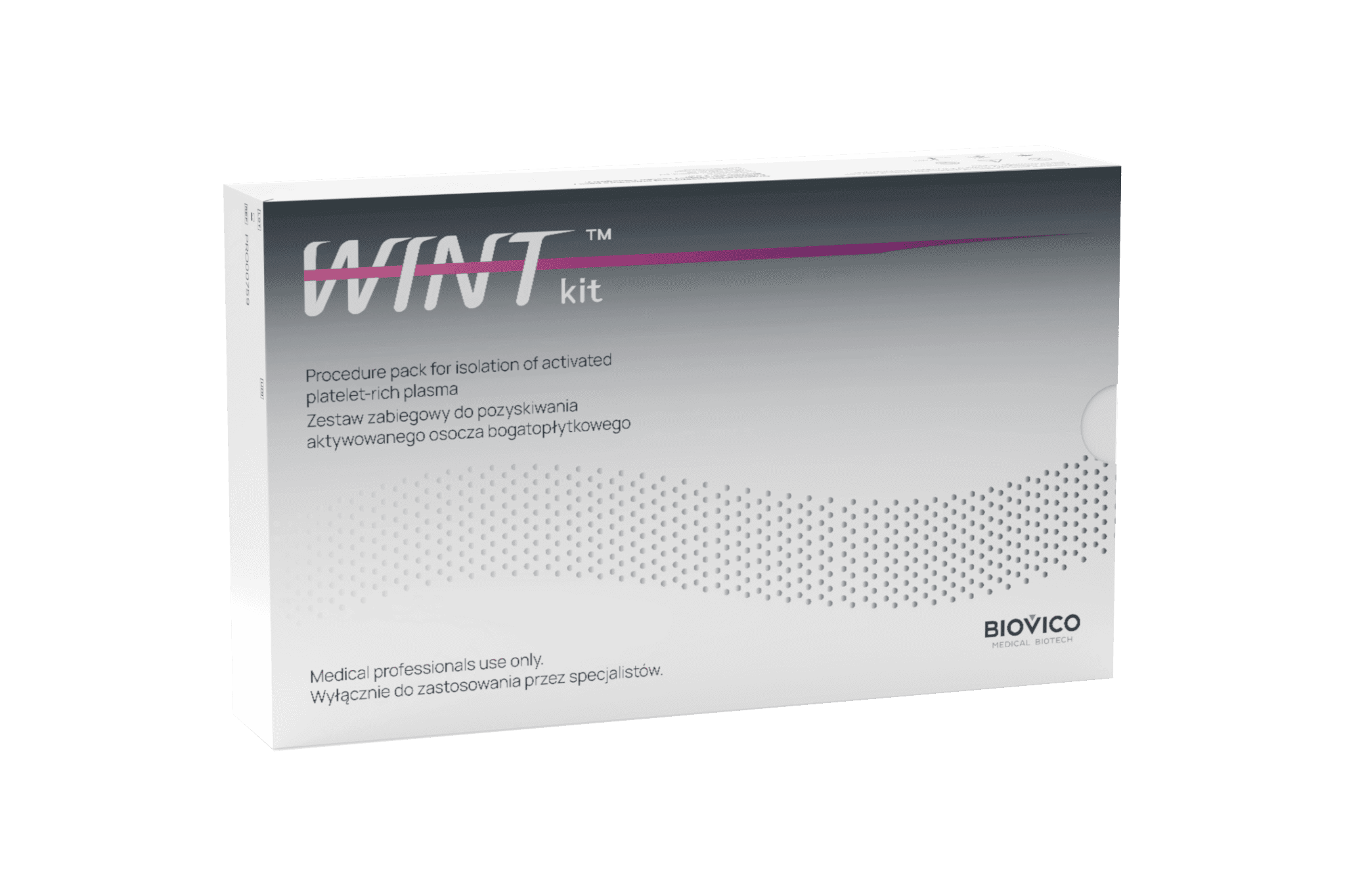
Intra-articular injection of the product obtained by the Wint™ kit is a highly recommendable therapy for joint associated pathologies. Based on the literature and experience, the therapy which uses autologous blood-derived product enriched with DKK-1 protein was estimated as an therapeutically effective against OA symptoms6.
Supporting evidences for the validity of Wnt signaling pathway inhibition by DKK-1 in OA:
- In OA patients decreased levels of DKK-1 in plasma and synovial fluid are observed7
- It has been shown that the level of DKK-1 protein is highly is related to the stage of the osteoarthritis → the higher stage of the disease, the lower concentration of DKK-1 in the patient’s plasma7
- Increased production of DKK-1 in synovial cells, chondrocytes and osteoblasts protects the articular cartilage from degradation and diminishes the progression of OA4,7
Materials:
A5_IFU_WNTPL_EN_220090_ONLINE.pdf
B5_REK_WNTEN_220836_6_online.pdf